A whip flag acts as a small signal that can make a big difference when you head out into rough trails or open dunes. If you’re looking to enhance both safety and visibility on your vehicle, investing in quality whip flags is a smart move for any off-road enthusiast. Its job goes beyond mere decoration and touches on safety, visibility and vehicle interaction with the environment.
A good whip flag blends material choices, mounting methods and practical design so it performs well under strain. The following sections break down the key traits that make a flag reliable on uneven ground and in changing weather.
Visibility And High Contrast Materials
A flag must be seen from a distance so drivers and other trail users spot you well ahead of time. Bright pigments and high contrast patterns cut through dust, glare and vegetation and help the eye pick up motion.
Reflective strips add another layer of detection when light hits the fabric at night or when a headlamp sweeps past. Choosing color and pattern that stand out against sand, scrub or forest is a straightforward way to improve safety.
Durable Construction And Weather Resistance
Tough fabric and reinforced seams keep a flag from shredding after repeated use in wind and grit. Fabrics with UV stabilizers resist fading so the material continues to reflect light and remain visible over long seasons.
Metal fittings and base tubes should resist rust and abrasion to avoid hardware failure out on a trail. Strong sewing patterns and bartack points at stress areas extend service life and reduce the need for roadside repairs.
Flag Pole Flexibility And Shock Absorption
A pole that bends and springs back saves both flag and mount from damage when you brush branches or take a sharp slope. Flexible fibreglass or spring steel poles absorb shocks while keeping the flag upright, which helps the whole assembly last longer.
Poles that are too rigid transfer force to the mount and to the vehicle frame and they tend to break where you least want them to. A balance of bend and memory in the material prevents fatigue and keeps the flag working as intended.
Mounting Systems And Fastening Reliability
A secure mount prevents wobble and keeps the pole aligned so the flag remains visible at all times on rough ground. Clamps, threaded inserts and reinforced plates that attach solidly to roll cages or bars are less likely to shift than flimsy clips.
Quick tighteners or lock nuts that stay put under vibration cut down on maintenance and save time at a rest stop. A mount that resists shear and twist reduces load on both the flag assembly and the vehicle attachment points.
Flag Height And Length For Terrain
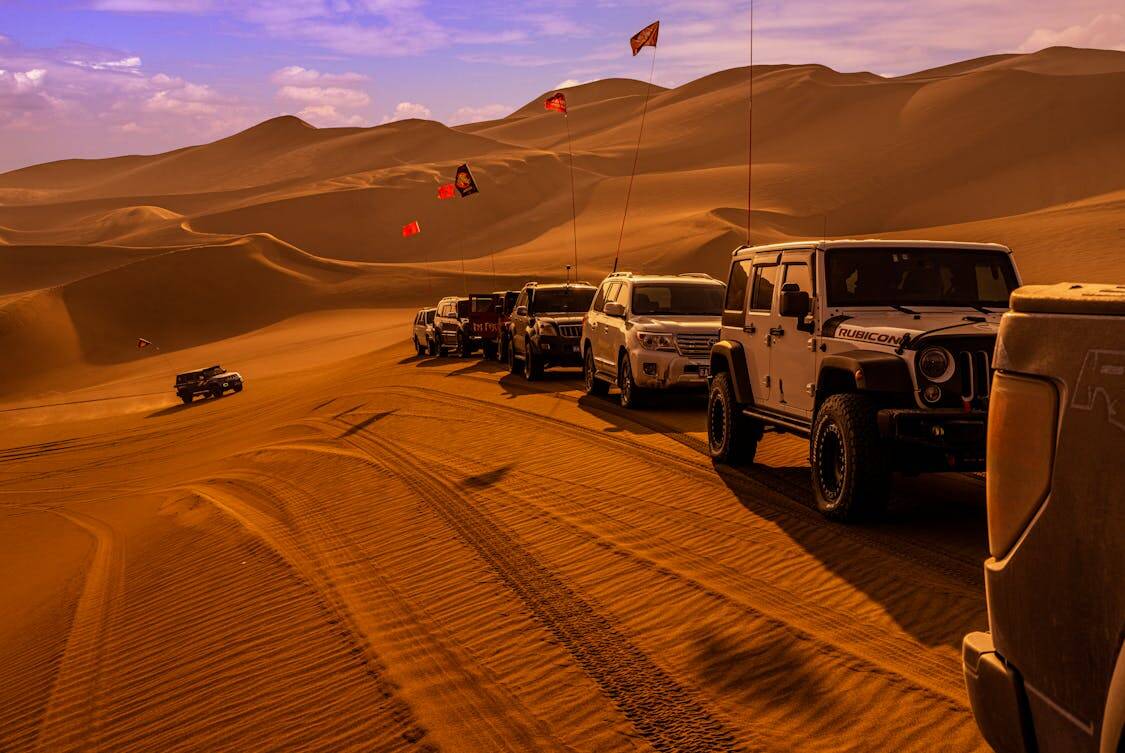
Pole height determines how early others can spot your vehicle over crests and through brush, and length plays a role in how much the flag catches the wind. Taller setups are common in dunes or hilly areas where sight lines are broken, while shorter rigs suit dense trails where clearance matters.
Too much height increases leverage on the mount and raises the risk of fatigue or failure in heavy wind. Finding the right length for expected terrain and trail speeds keeps balance between visibility and mechanical stress.
Reflective Elements And Nighttime Use
Reflective tape or panels make a dramatic difference when headlights sweep across a flag after sunset. Embedded retroreflective threads return light directly to its source and work well alongside high visibility fabric during low light hours.
Some rigs add small battery powered LEDs to increase presence when stationary or when a reflector would be hidden by dust. Placement of reflective elements near the flag edge and along the pole helps other road users detect motion and position quickly.
Material Weight And Wind Load Balance
Lightweight fabrics reduce the load on the pole and mount while heavier fabrics withstand tearing better in abrasive environments. Wind load grows exponentially with surface area so a large flag can become a sail that stresses every connection point.
Choosing a cloth that resists fraying and that has a controlled amount of porosity allows wind to pass through and lowers peak loads. Mixing a light fabric with reinforced edges often produces a reliable compromise for both longevity and reduced strain.
Quick Replaceability And Modularity
Parts that can be swapped out fast keep you moving when a tear or bend happens far from help. Modular poles, removable flags and common fasteners let you field repair a broken component with basic tools or spare parts.
A simple design that shares spare segments across rigs makes packing for long runs easier and reduces the weight of spare gear. The ability to reconfigure height, add a light or swap a panel keeps the setup flexible for different routes and conditions.
Legal Compliance And Trail Etiquette
Many parks and organized runs have rules about flag color, height and attachment method so it pays to match local requirements. Using standard colors or tags where rules apply avoids fines or being asked to leave, and it helps maintain predictable signaling across a group.
Keeping your flag tidy, not leaning into other lanes and lowering height where clearance is tight shows respect for other trail users. A little courtesy goes a long way in preserving access and keeping trails open for everyone.
Storage And Transport Practicality
A flag assembly that breaks down into short segments fits into storage bags and keeps your cargo area tidy between runs. Protective sleeves and snug bags prevent abrasion to the fabric and stop hardware from scratching paint or glass during travel.
Lightweight, compact designs make it simple to carry spares or stow the unit under a seat when they are not needed. The easier it is to pack and unpack a flag the more likely you are to use the right setup for each trip.
Usability And Ease Of Setup
A simple interface with clear steps gets you back on the trail quickly after a pause or a detour. Color coded segments, indexed fittings and intuitive clamps cut setup time without a manual at hand.
Instructions that match the actual parts and that avoid ambiguous hardware choices reduce frustration at a windy roadside stop. The best systems let one person install or remove the flag while keeping focus on safety and trail awareness.