
A law written about lawns is quietly nudging San Diego County homeowners toward a different kind of yard altogether. Assembly Bill 1572, California’s ban on irrigating non-functional turf with potable water, takes effect in phases beginning January 1, 2027, and it is reshaping the conversation about what to plant instead of grass.
The law’s direct reach is narrower than the headlines suggest, and that nuance matters. It targets ornamental turf that serves no recreational purpose, the grass along sidewalks, in medians, and in front of businesses, and it phases in by property type rather than landing on everyone at once.
But its cultural reach is wider than its legal one, and that is where the tropical-style yard enters the picture.
Who the Law Actually Covers
It is worth being precise, because misreadings are common. AB 1572 prohibits potable-water irrigation of non-functional turf, defined as grass kept purely for appearance, on commercial, industrial, and institutional properties and in the common areas of homeowners associations. It explicitly does not apply to single-family residences, and it does not ban turf irrigated with recycled water.
The timeline is staggered. Public and government properties come first, in 2027, followed by commercial and institutional sites, with HOA common areas phased in afterward. Functional grass, the kind people actually use, parks, sports fields, play areas, picnic spaces, is carved out and protected.
So a homeowner with a private front lawn is not breaking the law by watering it. The significance for residents is indirect: the state has formally declared that decorative grass irrigated with drinking water is a waste worth legislating against, and that declaration changes the default everyone designs around.
That shift in the default is already visible in HOA common areas and streetscapes across the region, which is where most residents encounter the new norm first. When the shared spaces around a neighborhood move away from ornamental lawn, private yards tend to follow.
Why Tropical Style Fits the Post-Lawn Yard
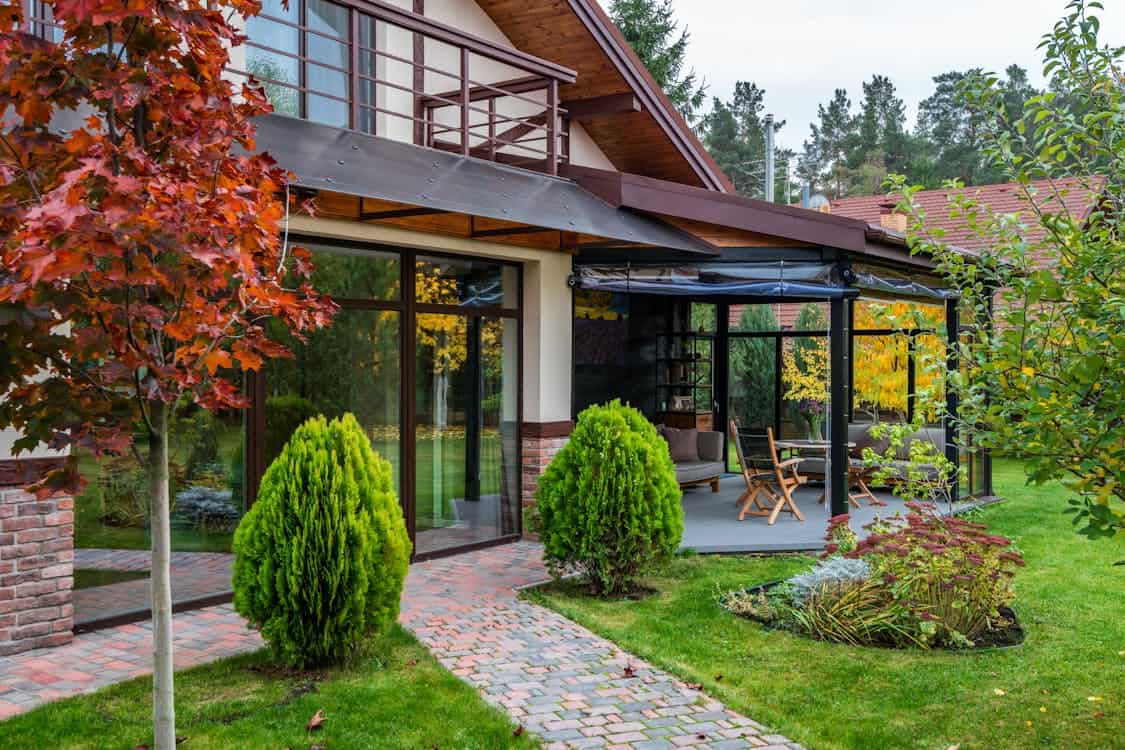
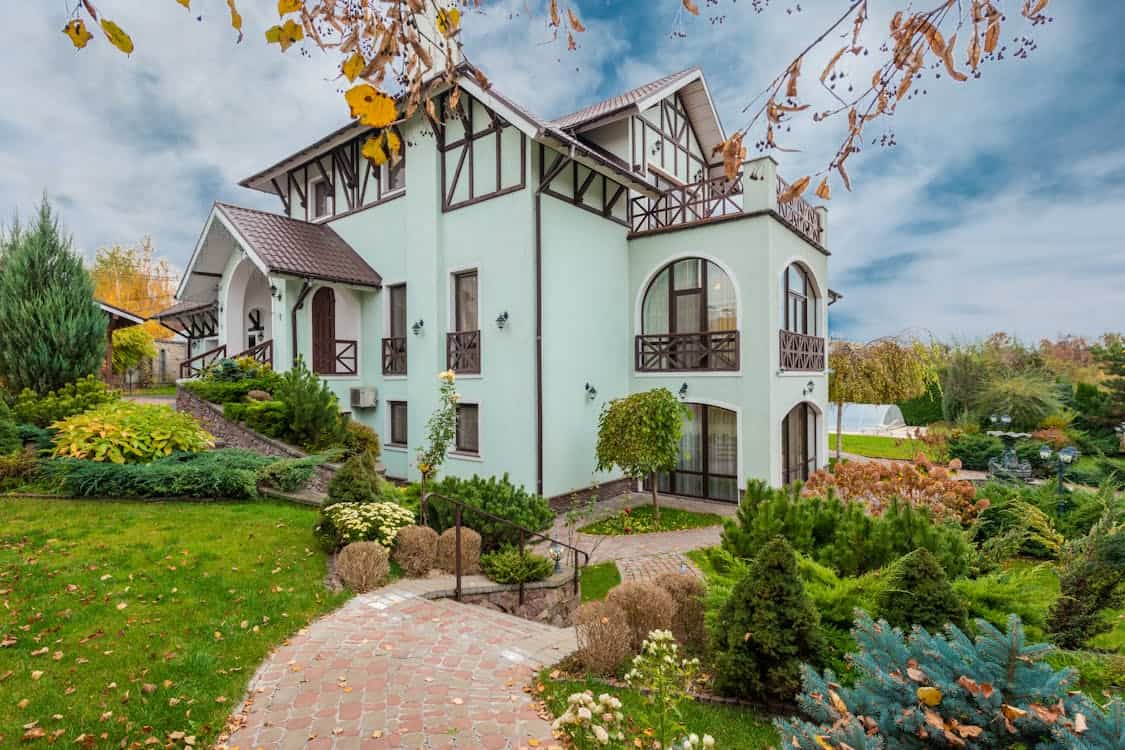
Here is the part that surprises people. When a homeowner removes a decorative lawn, the question becomes what replaces that flat green expanse, and tropical-style planting answers it unusually well.
A lawn offers one texture at one height. Tropical design offers the opposite, layered foliage at varied heights, bold leaf shapes, and a sense of depth that a turf rectangle never had. Swapping grass for a planted, layered scene is often a visual upgrade, not a sacrifice, which makes the transition easier to accept.
The water story works in the homeowner’s favor, too, when the palette is chosen carefully. Many subtropical plants suited to San Diego County’s climate perform well on drip irrigation and grouped watering, so a tropical bed can use far less water than the thirsty lawn it replaced while looking considerably more alive.
Ground treatments fill the gaps that grass used to occupy. Stone pavers, decomposed granite paths, textured concrete, and mulch define circulation and hold moisture, so the planted areas can stay lean. The result reads as a designed garden rather than a patch of bare replacement.
This is why the turf transition and the tropical look keep arriving together. The law removes a reason to keep ornamental lawn, and the tropical vocabulary offers a richer, lower-water thing to put in its place. One trend is pushing; the other is pulling.
How Homeowners Should Approach the Shift
For residents, the practical move is to treat any lawn-removal project as a design opportunity rather than a compliance chore, even though private homes are not the law’s direct target. The neighborhoods adapting best are the ones replacing turf with intention instead of leaving gravel and a few scattered plants.
Start by identifying what the lawn was actually doing. If it was purely decorative and rarely walked on, it is a strong candidate for conversion to layered planting. If children or pets genuinely use it, that is functional space worth keeping, and the law’s own logic respects that distinction.
From there, build the replacement around hydrozones and drip irrigation, lean on a backbone of low-water species, and reserve the higher-water tropical accents for spots where they earn their place. Mulch heavily, choose ground surfaces that suit the climate, and let the planting mature into fullness rather than over-installing.
Anyone in an HOA or managing a commercial property should also check the specific compliance deadline that applies to them, since the phase-in dates differ by property type and local agencies are adopting their own rules to implement the ban. The statewide framework sets the direction; local implementation sets the particulars.
The broader trajectory is not really in doubt. California has spent three drought-scarred decades moving away from ornamental lawn, and AB 1572 formalizes that direction in law. For San Diego County homeowners, the most appealing answer to a post-lawn yard increasingly looks lush, layered, and tropical, just on a fraction of the water the grass used to drink.
There is a financial nudge layered on top of the cultural one. Turf-replacement rebates have been a fixture of Southern California water policy for years, and converting a decorative lawn into a planted, low-water landscape is often the kind of project those programs were built to encourage. Homeowners weighing a conversion should look into what their local water agency currently offers before starting work, since pre-approval is usually required.
What ties the whole shift together is that the regulatory pressure and the design opportunity point the same way. The state wants less ornamental grass drinking potable water; homeowners want yards that feel rich and alive. A water-aware tropical landscape satisfies both at once, which is why the conversion rarely feels like a loss once it is done.